Saturday, September 05, 2020

Gary Antcliffe

Tracking down the geeky kids from the 80s/90s is often tough but always rewarding. I'm grateful that I was able to get in touch with Gary Antcliffe, of PAL Developments (my thanks to his wife Jen, who helped me with my stalking)

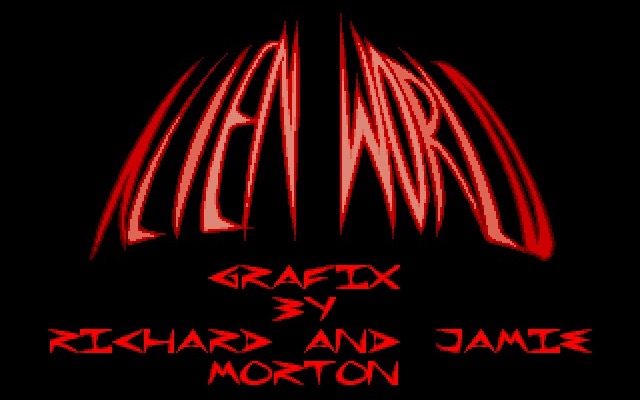
You may remember that this is the talented fella behind seven Atari ST games for HiTec and Virgin Mastertronic? His final two games were absolute knockouts: Alien World is a shoot 'em up with frenzied action. Whereas Scooby-Doo & Scrappy-Doo is...well... a new personal favourite of mine. Terrific games, equal in fun & quality.

So, I thought it might be an idea to track down this fella and have a chat about his history? I found him very interesting, especially with regard to his upbringing - like the need to get two paper rounds to afford a Commodore 64. Wow, what a humble start, for what was about to be the beginning of a very special career. My sincere gratitude to Gary for taking the time out of his schedule to answer all my questions, and I hope you all enjoy the interview.

However, I admit that I almost censored his above photograph... Hmm, I can't think why! ;-)


Gary Antcliffe - The Interview

Hello Gary, please tell us about yourself

I got interested in games at an early age. I was probably around 8 or 9 when I first saw and played Space Invaders. This would have been when we were on holiday and in later years my parents took us to Butlins and I remember visiting the arcades lots to try out all sorts of other games. This was only once a year though and as I grew older I became aware of home computers starting to become popular. I remember looking through the Argos catalogue and flipping between the Spectrum and Commodore 64 and dreaming about owning one of those machines.

I think initially I was drawn to the Spectrum as it was cheaper and had all sorts of peripherals in the picture. One day though my friends and I visited an electrical/appliances store called Comet. They had some computers on display and we could play some games that were already running on them. I'm not sure if it was Tony Crowther's Loco or Suicide Express but as soon as I played that game I was hooked, I had to have a C64!

We were a working-class family though, my dad worked in a steel mill and my mum was a cleaner at the local college. The C64 was just too expensive. However, my mum made me a deal: if I could save enough pocket money to pay for half of the C64 then they'd get me one for Christmas. I was already doing 2 paper rounds and had saved some money so after about a year of saving that I had enough and my folks bought me a C64 for Christmas. I think I was about 13 at that time and this was the start of a life long passion.

I spent loads of time playing games, swapping tapes with friends at school as kids did. I was always curious as a child and would take things to bits to see how they worked. I also loved building things in Lego and Mechano, so I think this curiosity and creativity lead me down the path of wanting to create my own games. It was hard to get started though, I tried Basic but it was too slow. I used to type in pages of listings from magazines but often these were just data statements and told you nothing of how to program a game.


The programming bug was about to be born...

I was aware that real games were written in machine code but had no idea how to do that until one day I came across a basic listing for an assembler. This gave me a route to trying out and learning to program in assembly. The only problem was you had a limited number of lines before it ran out of memory. I then saw an Action Replay cartridge advertised in a magazine. This had a machine code monitor and disassembler, so I saved up more paper round money and bought one. I would then type directly into memory in hex and disassemble the code to make sure I had done it correctly. This was the start of my proper programming days and I was able to experiment with writing scroll routines and moving sprites around the screen...

It was hard though and I had a love/hate relationship with coding initially, getting frustrated and going back to just playing games, then really wanting to make my own creations and coming back to programming and trying again. I wanted to do so much but just didn't know how to. All I had was a C64 reference manual, an Action Replay cartridge and my own creativity. Looking back on it now, writing directly in machine code is pretty cool given my age at the time. To this day I still remember some of those hex opcodes!

The next few years were spent on and off between playing games and trying to write them on the C64. I'd often get partway through a game then have ideas for another game and start working on that instead. Actually finishing a game can be the hardest part of it.

I left school and went to college to study programming. Unfortunately, they dropped that just before it started and put me on a business course instead, boring!!! Fortunately, they had a great careers advisor and after a few months, she secured me a work placement at Alligata Software. After 2 weeks they offered me a full-time job!


What was it like working for Alligata?

At Alligata it was pretty standard. I started as a junior programmer helping out on a C64 game doing things like the intro, high score table, music and sound code. I had access to an assembler rather than doing everything in hex. We assembled from a tape which took about 20 mins and sent the game over the parallel port to another C64.

I later moved to programming the Amiga and we used GenAm to assemble the code and ran it on the same machine. This was a bit time consuming as you'd take over the operating system so you had full control of the machine and all of the memory. So you had to reboot and reload everything after each run.


Onto PAL Developments...

Where things got more interesting and unusual was later in my career when working for PAL developments which published games though Hi-Tec Software. We built our own development system from the ground up. I wrote almost all of the software so I created assemblers for different chipsets (6502, Z80, 68000) and we connected to different machines using parallel cables. I wrote a text editor, disassembler, machine code monitor and communication software on both the Amiga and ST. We could then send over and run the code on the C64, Spectrum, Amstrad, Amiga, ST, MSX and then I later altered the Z80 assembler so we could write Gameboy games as well. It was a similar chipset to a Z80 but with some registers and instructions missing, so we called it the Z40 internally.

We had to build some specialised hardware as some machines such as the Spectrum, Amstrad, MSX and Gameboy didn't have a parallel port, but an electronics wiz (Ian) from Alligata built those for us and wrote the comms software on those machines. This was a huge time saving for us, no more rebooting after each run, just sending it over the parallel port and running it on the target machine.

If the game crashed then you could inspect the registers, disassemble the code, save off memory etc. Best of all was that the assemblers were lightning-fast, your whole game was built in about a minute. You'll be pleased to know that I mostly developed on the Atari ST as the CPU ran quicker than the Amiga so it would build the code faster.

That was just one part of what was needed. I also wrote map editors, tools for cutting out sprites, placing objects, creating collision data, full-screen animation codecs... I think the only commercial software we used was DPaint. It's not like today, there were no engines, few commercial software tools, you built everything yourself.


A do-it-yourself world?

As I mentioned we built our own development system and I wrote most of my own tools such as the map editors. These would also get refined with extra features added each time we made a new game, so there was a gradual improvement over time.

I think I used the ST as my editor/assembler. We used a standard 520 ST and an Amiga 500. For the graphics then Richard Morton would draw the blocks and sprites in DPaint and then import these files into our editors. The editors would then cut the blocks up, pull out the sprites and palettes and then he could go about creating the map files for the levels and then save these in a binary format that I'd use in the game.

For audio, I wrote a tracker player and we'd outsource the music. It's so long ago that I can't remember how we did sound effects, I think for the ST, maybe I did those myself with a little editor I created to define the sounds we played? It’s so long ago I really can’t remember!


A very different world?

I guess when I started at PAL it was a step backwards. Alligata was a bigger company with more people located in the same office working together. PAL was just me and another programmer Richard Stevenson in a back room of a small office building. It really didn't matter though as I was doing what I loved which was writing games.

Over time the team grew and when Hi-Tec was set up then there were more opportunities to do slightly larger and more challenging games. The atmosphere improved as well as you could discuss ideas with other coders and artists, chat with the team who created the box art, did the publishing and the advertising.

The early games for Mastertronic were written in a matter of weeks, maybe a couple of months. As my programming skills developed and PAL / Hi-Tec became larger then the games became a bit more ambitious and took a bit longer. The longest title in development was Scooby & Scrappy Do, which took about 6 months for the Amiga and ST.


You appeared to master the Atari ST quickly?

I think there are a number of reasons the games got better. I certainly got better at programming. Going from the 6510 in the C64 to 68000 CPUs was a big step up and the 68K was just fantastic to code for. 15 32bit registers and a feature-rich instruction set, it was just a dream to use.

In the early days, we'd outsource the graphics as well as the music and the games were much simpler. As the company grew though, Richard Morton joined us and we worked together on pretty much every game I did from that point onwards. That teamwork made a big difference to the quality of the games and ideas we had, it was very collaborative and a really enjoyable time in my career.

As the standard ST didn't have much in the way of hardware then horizontal scrolling was one of the big challenges. The CPU just isn't fast enough to software scroll the full screen and render sprites at a reasonable framerate. We worked out a technique though which I called pairs scrolling. I'd look at adjacent blocks that were scrolling on to the screen and pre-shift (software scroll) these into a cache. I'd do this for the whole scroll area and when I came across 2 blocks that were already in the cache then I could directly copy them to the screen rather than having to incur the slow cost of shifting and combining them again.

I think this is probably what you're seeing with Alien World and Scrappy that makes a big difference, along with improved sprite drawing routines that I optimised over the years. It's all about counting the number of CPU cycles taken and looking for ways to optimise the code to get better performance.


Who inspired you?

Initially, my inspirations came from C64 games as that was the machine I was using. Tony Crowther was a definite inspiration, he produced many games I played as a kid and I met him a few times when I started in the industry. I used to read Zzap64 every month and you'd learn the names of the more prolific programmers. I loved reading the programmer diaries and Andrew Braybrook made a big impact as well. Paradroid and Uridium were favourite games of mine and reading about how these were developed drove that internal craving to make my own games.

Archer Maclean created some amazing games as well, Dropzone and IK+ on the C64 are fond memories. I was actually playing Dropzone at the Cambridge Computing History Museum last year showing the game to my son and who popped up behind me to watch, only Archer! I’m not sure how I knew it was him having never met him before, but I did. Anyhow, we had a long chat and it was great to be able to thank him for the influence he and his games had on my life, which ultimately helped shape me into the person I am today.

We were always trying to make better games and we'd often look at arcade games for inspiration too. You can see it in a number of the games we produced, Ikari Warriors gave us ideas for Blazing Thunder, R-type for Alien World, Space Harrier for T-Bird / Futurebike and there were a whole host of platform games that gave us ideas for Scooby. I was a big shoot-em-up fan and we still visited the arcades occasionally. I remember on one trip out Dave Thompson completed Space Harrier on a single credit, pretty good value for just 10 pence!


Any inspirations from the demoscene?

I remember looking at demos early on with the C64 and later on the Amiga and ST. It certainly had an influence on me when trying to program. How could they get more than 8 sprites on the screen when that was all the hardware supported? I then started to experiment myself and wrote little C64 demos with bouncing raster bars, opening the borders and some basic sprite multiplexing, although it wasn’t very sophisticated. Hey, I was still a kid!

Writing the title and high score screens for a game can be a bit of a bind as they tend to come late in development and you’re pretty tired by this time. As I mentioned earlier, finishing a game is really hard. I think some of the things I did was just to make the title screens look a bit different, and to give myself something enjoyable to do!

There are some great demo coders out there and I’ve worked with a number of them over the years, especially at Core Design. Coders from that era were always looking at ways to push the machine, whether that was doing things the hardware wasn’t designed for or meticulously counting CPU cycles to optimise your code as well as you could. I believe this attitude has helped me over the years. If you look at Killzone Mercenary on the PS Vita that game really pushes the boundaries of what is possible on a handheld device at that time. I was the engine lead and the brief was to produce a game that looked like a PS3 title. That was a lot of hard work and performance analysis as the PS3 is a beast when you fully leverage the SPUs, so it’s massively more powerful than the Vita! It was a struggle getting so much out of that machine, but I think we did a really good job in the end.


Any spare time left to play a few games?

Unfortunately, I don’t get that much time to play games these days as family life doesn’t leave me with lots of spare time. I can’t say I’ve booted up any of my old games over the last few years. I don’t have the time to invest in large games but I do have a Switch and I do like to look at some of the indie titles that are out there.

I have recently bought a PC-Engine mini and I’ve been enjoying playing some retro games. I was aware of the PC-Engine when it was out but it wasn’t easily accessible so I bought a MegaDrive instead at the time. I must say though I’m really impressed with it. Some of the arcade conversions are almost perfect and the fact that it’s running an 8bit 6502 derivative CPU is astounding.

I also take my kids to the Cambridge Computing History Museum quite often so I get to play some of the older games and it’s a great day out. My wife isn’t a gamer though so she thinks it the most boring place on the planet!


Looking back, any regrets?

I’m not sure really. I’ve had a long and varied career, worked in many different studios, cities and sometimes other countries. Everywhere that I’ve worked I’ve met interesting people and have gained some life long friends. Even when things have been tough, if you look back you can usually find something positive from the situation. Programming and especially writing games is a life choice; you’re choosing to have a life where you continually learn. You have to otherwise you just can’t compete and the games industry is a very competitive place.

I remember one of the times when I went to see Tony Crowther and he showed me a scrapbook with reviews of all of his games, cut out of every magazine he found a review in. At the time I thought ‘damn it, wish I had done that!’. It would have been good to have a record of all the games I’ve worked on, a copy of each title and the original source code. Unfortunately, a lot of this has been lost over time and if I was to go back then that’d be something I’d do differently. It’d be nice to be able to show my kids and pique their interest in following their own creative endeavours as they grow up, whatever they decide to choose. 


Would you say that times have changed for the better?

That would be quite a long answer but you could put a link to my The Centre for Computing History video here if you like? Which is a superb idea because this is a very interesting video and an eye-opener - Steve.


What are you doing these days?

I guess a lot has happened since the early 90s. I’ve worked on most platforms since the 16bit era, all of the Playstation platforms, N64 and PC. I’ve worked on some well-known titles - Tomb Raider, 24, Medievil, Little Big Planet and Killzone to name a few. We pushed the boundaries of what was thought possible in VR with RIGS on PlayStation VR. I’m no longer in the Games industry these days though. When Sony decided to close the Cambridge Studio I decided to try something else. I’ve been made redundant 5 times in the games industry due to companies going into liquidation. Most of those times finding a new job had meant moving to another city as well. This isn’t something I’m prepared to do anymore now that I have a family.

I do miss writing games but what I miss most is the creative side and teamwork. I don’t miss the stress, pressure and unrealistic expectations from publishers, massive teams where you’re a tiny cog in a huge machine. I miss the small team vibe, pushing the boundaries of what you believe can be done. I occasionally tinker around on an emulator and have been writing a Uridium style shooter on the C64 but I’ve had to put that on hold since the pandemic started. I’ll look at this again during some of my holiday time when I don’t need to focus quite so much on my work life.

I now work for Arm in Cambridge who designs chips and you probably have several of these in your phone, tablets, smartTV and other devices. I lead a team that looks at GPU performance when running general-purpose compute on those devices, so languages such as OpenCL and Vulkan compute rather drawing graphics using vertex and pixel shaders. With advances in technologies such as Machine Learning and digital assistants, more of this processing is moving on to mobile devices rather than being run in big data centres in the cloud. This is where being able to run general computing workloads on a GPU, rather than just rendering graphics, becomes ever more important.

It’s very different to working in the games industry, but challenging in a good way and my skills with pushing the boundaries of performance come in handy. I’ve worked at many places before but I’ve never known any company to care about its employees as much as Arm does. They’re very open with their staff, promoting a sharing community with learning and development as a pivotal part of the job, so this suits me well.

Thanks for getting in touch Steve, it’s been quite a trip down memory lane!

Friday, September 04, 2020

Electrons From Acorns


A new disk mag

My old mate Stuart, aka the Elk of STatariART, is working on a new diskmag which he's developed using GFA Basic (is there nothing that tool can't do!). He's already at issue three, which features a nifty user interface, a silly letter (that you shouldn't read), and lots of superb medium-resolution artwork (I'm looking forward to more pics in the future).

Content is low, at the moment, but steadily increasing now that the groundwork for the magazine structure is there. He hopes to release a disk each month, which is ambitious, to say the least. His plan is to recreate that community vibe from the '90s. So, you're invited to contribute whatever you like and have your say. Come on and get involved. :-)

EFA issue #3 can be downloaded from over at the Demozoo website, and I invite you all to check it out sometime over the weekend. Here are a few sneaky screenshots to tease you into clicking on that download link.

I asked Stuart why he's making an Atari ST diskmag in the 21st century, and here's what he had to say...

Hey Steve! First, can I say thank you to the Crypt for picking up my new diskmag thing - I appreciate it cos I know how busy things are down in the fiery depths of the undead Atariverse! Here's a bit of background about me and how I arrived at the idea of doing this diskmag thing for the ST.

My name is Stuart Johns but I go by 'the elk'; my passion thereby being Public Domain, specifically creating artwork and music to contribute to the PD scene. I started out in computing back in 1983 when my folks bought an Acorn Electron and it got me hooked into the 8-bit world. Come the late '80s and we upgraded to a C64, but I soon replaced this with a Miggy and it was on that machine that I began to fiddle around in Deluxe Paint and ProTracker.

After these beginnings in the '80s and '90s amongst Acorns and Commodores, it wasn't actually until 2016 that I got my first ST machine! When I was younger, a musician friend of mine had an ST and I had always been intrigued by them. The chance to get one at a good price came up and I grabbed it. I immediately fell in love with it; not just the aesthetic but the way it worked and of course the MIDI side of things.... and Degas Elite... I mean what can I say? True Love!

It's always been important to me that people use the stuff I am creating as a truly public domain resource - I encourage people to reuse it and change it themselves without any credit to my original work. But I am always trying to find new ways of getting the art out there. The EFA diskmag idea was borne and the Atari ST seemed like the perfect way to springboard this. I wish I had got an ST back in the day instead of the miggy, but it's all good... it just means I have a lot of catching up to do!

That brings me onto the EFA diskmag as it stands. It's up to issue 3 (that being released on September 5th, 2020) and I am coding it in GFA Basic on my STe. The first two issues were extremely bare-bones, but with issue 3 I see a bit of an evolution - sub-menus, structure, cleaner coding for displaying pictures and even displaying text files within the mag itself - with a good deal of help from folks over at the Atari-Forum.com (what is probably simple coding to most folks lol).

So I see issue 3 as a foundation issue. I admit that content is thin, but I feel there is a structure to move forward with and hopefully, people will email their letters, thoughts and pictures (PI2 format please). I will hopefully be doing some interviews and such as time goes on and also looking at the ST itself as a vehicle for PD art and music. Everything starts from something, right?


- EFA diskmag Issue #3 screenshots -


Friday, August 28, 2020

Crazy Cars III


Oh no, another Crazy Cars?

Yep. I was a bit worried because the first game was rather crude, and the second had infuriating mechanics that angered me. So, as you can imagine, I was sceptical about the third. Okay, it's 1992 (I wish), and Titus appears to have redeemed themselves with something that actually looks rather good. What??

Yeah, it looks cool, and with a funny background story proving that you should never refuse a gift. Imagine being offered a Lamborghini Diablo? Ugh, take it and drive away as fast as you can, and that’s what we’re doing. Sure, we spent most of our life savings running it, but we now own a sexy sports car. More importantly, we have enough cash left to compete in America’s Bull Run, the Saturday Night Races.

This massive event spans the lower 48 states, pitting drivers against fierce rivals.  Four divisions are contested, and the competition begins at the bottom of the fourth division with a modest $6000 in the pot (did I say modest lol). Fortunately, this is more than enough to fuel our journey through Miami, Denver, and Memphis. Each victory boosts your purse, unlocking the potential to compete in more costly races elsewhere.

Enough yapping, I think it's time we viewed the opening screens...


Put the pedal to the metal!

Before you rush off and waste cash, it makes sense to practice. The map shows many locations, and each has a varying degree of difficulty thanks to narrow, twisty lanes, obstacles, and other cars. Not to mention the cops who are looking to boost their Christmas party fund. Well, why bother arresting real criminals?

Once you feel you've practised enough, slap yourself and then practice some more - you won't regret it. Eventually, you will be ready and can head over to the Tournament with confidence. Pick yourself a character, I'm always the Mr T lookalike! It's a good idea to play safe, with something you can afford, I advise Memphis. All "yellow" places are initially open to you with details of fees, prizes, and those dreaded cops.

Prize money is awarded for coming 1st, 2nd, or 3rd, but it's possible to boost this with the rival drivers. These guys are always up for a flutter - an opportunity to earn extra money? So long as you don't get too big for your boots and practice more than just once. Yes, you really should practice. Take the hint!

It sounds complex, but it's not so let's take a gander at some more sexy pixels...


Titus 2:13

Crazy Cars III is thankfully nothing like the first two in terms of gameplay and quality. It's a rush slamming down the road, zooming by the other cars, with the thrill of passing a dreaded rival. The controls are excellent, with our joystick used to steer the red beast: push up or hit fire to accelerate, and pull back to brake. You can choose between manual or automatic gearboxes, which means I choose the latter!

This racer is fast and furious (sorry) and feels like Titus sneakily took inspiration from others, like Lotus II. That's okay, there are lots of examples of rip-offs being better than the originals, and it's the gameplay that matters. So play dirty, but always keep an eye out for the cops. Those guys never give up and will try to chase you all the way through to the end. So whaddya gonna do? Flee or be a good citizen? FLEE, of course!!!

Win big and collect the bounty, then take what’s owed to you by rivals. Now it’s time to think about spending your winnings. You could fix your car or enhance it with a better gearbox, turbo boost, tyres, and more. Perhaps you could even unlock a tougher race now that you’re the Million Dollar Man? Repeat this process until you’ve earned enough to enter the Divisional Race and potentially get promoted.

And finally, it's time to view some amazing in-game screenshots. Enjoy these belters...


A shiny red car and a roaring engine?

Yup, now we move on to the aesthetics. They never matter, but are nice to have...

Well, the graphics are ace. Simple as that. This is one of the most glamorous 16-bit racers with a decent framerate and good sprite scaling for everything that whizzes by. The weather effects are a nice addition, but only if you've remembered to change the tyres. The palettes I adore, as they use beautiful colours. Perhaps the most visually-gorgeous racer on the ST?

The audio is good with a neat tune and sound effects. Most effects are YM chippy and could have been better, but there are some cool touches, like when going under a bridge. The best is the whirring sirens of the cop cars, which are excellent. But this highlights the Diablo's mundane engine sounds. That needed to be a sample... Ah, well, can't have it all?

Here are some funny faces and the sweet smell of failure for the last few screenshots...


The CryptO'pinion?

Every game has its flaws, and I felt my Diablo could have cornered better. I also disliked the overly narrow tracks and the inconsiderate locals who caused (my) road rage. This affected my driving skills and my wallet as I had to pay for all the extra repairs. Perhaps there are simply too many cars on the roads, or is it just me?

Enough with the whingeing, ya' old whinge bag! Crazy Cars III is absolutely outstanding, and it’s easily the best in the series, hardly surprising given the fast thrills and mechanical excitement to be had. I love the freedom to customise the car, gamble and race through stunning locations. The rush of being chased by relentless police is exhilarating. Perhaps this racer is even better than Lotus II, which is a tempting thought.

Set aside a few hours for you and the kids. You won't regret this need for speedster, it's blummin' excellent!!

Download the floppies via Atari Legend

Monday, August 24, 2020

ymphibian


DOOM!

I recently read that Effect had released a new demo by Tom Kito, which is stuffed with 12 tunes by Proto. I love chiptunes, and the Atari ST already has some incredible musicdisks in its library, so I had high hopes. Thankfully, ymphibian is foot-tappingly superb, and I enjoyed it so much that I made this recording to share.

There's a range of crackers here, and that E1M1 tune is shockingly great and something this old Doomguy enjoyed!! Also, I appreciated the autoplay feature, which is something every music disk should have. So, as their website says, "sit back, grab a beer and enjoy the banging beats from your Atari ST’s YM2149".

You can download this excellent music disk from the Effect website. Enjoy...

Sunday, August 09, 2020

Party Seven!


Gary's games

I was looking back through the AtariCrypt archives and came across Alien World, a sensational shooter. Oddly, unknown to many gamers. It was developed by Gary Antcliffe for Hi-Tec Software in 1992 and is a bit like Blood Money or Zynaps. You know the kind - kill everything whilst trying not to die a humiliating death!

He's also the man behind Blazing Thunder, Bomb Fusion, Future Bike Simulator, Scooby-Doo, T-Bird and Yogi's Great Escape. Quite a bunch... So, I began to wonder what his other games might be like. Annnnnd you've guessed it! Yes, here is a quick compilation of Gary's games for the Atari ST.

I hope you enjoy this brief history of his games. Let's take a look...


- Alien World -

Firstly, there's no need to rewrite any more of my junk! Just take a walk down AtariCrypt's memory lane and then download what is nothing less than an exciting, if brutal, shoot 'em up with super-sonic visuals to boot. Yep, it's tough and takes no prisoners, but a skilful and persistent player will be rewarded with a fantastic game.

Grab the floppy disk download from Atari Legend and the HDD from 8BitChip.


- Blazing Thunder -

Remember in Ikari Warriors when you could kill soldiers from within the relative safety of your little tank? Have you ever wondered what it might be like to permanently be inside a near-invincible tank throughout the entire game? Well, wonder no more because this arcade-inspired (aka blatant rip-off) offers exactly that.

Stop! Don't touch the keyboard because there is an incredibly cheesy intro which is hard not to love. The graphics and sound effects are both excellent, with our hero looking like a Rambo wannabee with the mad 80s permed hair! Following this is the title screen, which is worth leaving displayed just to enjoy the thumping music.

As we begin this vertically-scrolling military shooter, everything is pretty much what you'd expect with soldiers blindly offering themselves as free cannon fodder whilst others lurk in trenches, trees or operate guns. What it obviously lacks in originality is more than made up for in the fun department right from the start:

  • Level one takes place in a jungle, of course, before advancing onwards to wetter places for the next stage. These two levels are possibly the best reasons to boot up the game.
  • We head into the desert for the third stage, which is where I found my tank starting to show its cumbersome colours. Having to navigate back 'n forth through the terrain was a pain, especially when ginormous tanks are blocking the way! The boss is impossible to beat without a cheat!
  • Watch out for the fiery landscapes of level 4 with tougher enemies and awkward landscapes. Things are now impossible, and I cannot imagine anyone playing this without a cheat!
  • Level 5 is a breath of fresh air, feeling somewhat like the first two levels, and I got serious vibes of Fernandez Must Die. Just watch out for the trains and grenade launchers! The boss is impossibly difficult, and even if you do defeat it, the robot guardian appears to kick your butt.
  • Completing the game rewards you with a lame well-done message...
I love rumbling through the jungle in my beastly tank, but what were they thinking about when creating such an enormous sprite? It's huge!! Thankfully, the controls are sweet with fast movement and a design that makes it easy to manoeuvre. Running down the soldiers is the first thing to do! Why not? I'm in control of 100 tons of steel, so I'm bound to enjoy squashing the enemy into the tank's tread. Watch out for mines that will sap your energy (yep, your tank has energy!) and stay clear of hidden bombs marked with a B... for BOOM!!

There are power-ups that aid health and improve weaponry. Hitting Spacebar operates your own collection of bombs - this is insane and dead funny when soldiers are caught in the explosion. They turn into black-singed corpses!! In fact, the bombs are most useful against the bigger baddies and end-of-level bosses.

Graphically, this is an average looker with a poor framerate that doesn't come close to Dogs of War or War Zone. I liked the palette, and the sprites are the best thing. However, there is little or no animation - your tank! If you're wondering about the audio, don't. Spot effects, which are well, you know...

Blazing Thunder is a good shoot 'em up, but it gets repetitive after the first level and is difficult. However, fighting from the "safety" of a tank does offer an alternative spice to the genre and running over soldiers is always fun. Okay, I'm never going to delete Ikari Warriors for this, but I enjoyed this a bunch.

Grab the floppy disk download from Atari Legend.


- Bomb Fusion -

Like many Atari ST guys, I upgraded from an 8-bit computer, which means lots of fond memories, and I've always got a soft spot for anything reminiscent of that era. A good example would be the Dizzy games, Starquake, Highway Encounter, Head Over Heels and most certainly the recent and incredible Bugziacs.

Okay, here goes... in Bomb Fusion, Terrorists have sneakily planted explosives inside a nuclear station, and we've come to save the day - arriving in a Sinclair C5. So it's our job to systematically defuse each bomb before the radiation levels reach dangerous levels. I'm getting whiffs of Bomb Jack, but there is also the additional task to collect and store any leaked fuel pods. Well, I guess that adds a little more depth to the game?

Getting around each level is easy thanks to the number of platforms used to access each remote bomb. Sometimes these are way out of reach, which means using pressure pads or falling off the screen. Yep, falling off the bottom of your screen allows you to reappear at the top, which is a nifty idea. Also, there is a weird ball randomly bouncing around for some reason - touching that isn't good for your health.

Graphics never make the game, but let's be honest, it's nice to have your Atari ST looking hot!! Sadly, I can only imagine the shock on anyone's face when they first played this - did we get a direct Z80 port or something? Also, the music is irritating and possibly the worst I have ever heard from the Atari ST. Be quick and hit F10 to flip to sound effects before your ears bleed. Yes, they are lame, but a zillion times better than the music!

Once you've got over the shock of your Atari ST pretending to be a ZX Spectrum, this is quite good. Scurrying off the screen, frantically trying to defuse the next bomb, is a rush. However, it doesn't really go anywhere beyond that and later levels are very difficult. Ten minutes of fun, but definitely the weakest game.

Grab the floppy disk from Atari Legend and the HDD from 8BitChip.


- Future Bike Simulator -

Apparently, motorbikes were banned in 1995 only to be replaced by 300mph anti-gravity Future Bikes! The highways have been converted into The Strip, a new track designed for speed without annoying roadworks or Sunday drivers. Each section is littered with mines, bombs and other riders who can be shot and then robbed of their loot. Use this cash to upgrade your bike with missiles, shields and other goodies.

The controls are great, but sometimes, a track would feel too cluttered, especially in the city. Ride, blast, and kill anything that gets in your way and survive as long as you possibly can. What more could you want?

Visually, I might have been impressed around 1988, but this came later, so I'm shocked it's not better - although I thought the sprites scaled nicely. Interestingly, there is an option to increase the framerate by hitting the F key, which is fast and excellent. You can flip back using the N key, but then everything feels rather sluggish. Sadly, the audio is very disappointing with mediocre sound effects, but at least the title screen music is superb! 
I found that the 25Hz mode was best experienced using real hardware. By far!

This is a neat game, but I failed to see anything resembling a simulator, so I'm renaming it Future Bike Racer. The tracks are long and crammed with many bad guys to blast into smithereens, but there's nothing mind-blowing here. I found the simplicity of doing nothing more than riding my bike and killing folk!

Grab the floppy disk from Atari Legend and the HDD from 8BitChip.


- Scooby-Doo & Scrappy-Doo -

I'm a bit of a fanboy for platformers, and this Scooby snack proves why I love the genre. It's bright, colourful, and detailed with excellent controls. However, it's based on Scrappy-Doo, that annoying pup who ruined what was once a fantastic show. Anyhow, Shaggy and Scooby have been kidnapped by the evil Baron Von Drak, which means we are (groan) Scrappy-Doo, who must attempt the rescue. We begin on a ship, heading to a desert island, with later levels taking us through caves and forests before a battle with the Baron himself.

Each stage is superbly designed, with the chance to enter hidden secret levels for tons of bonuses. The enemies are varied and run around like crazy fools, with some hopping to and from the different ledges, which was most unexpected. There are several items to collect for health or power-ups, and Scrappy can throw a mean couple of punches, even if his reach isn't that great. Collecting Scooby snacks will eventually reward you with an extra life, and you will need that for the desert stage and onwards when things get a lot trickier.

Visually, this is an excellent treat!! Scrolling is smooth, sprites are cartoon-perfect, and the levels are utterly gorgeous with a great design using bundles of colour. Audio is probably the best of all the games mentioned here, thanks to funky chiptunes. You can switch to sound effects, but I wouldn't bother.

This is a tie with Alien World for the best of Gary's games. They're very different, of course, but I cannot decide between them. Good old Scrappy has delivered a killer punch with something that looks, sounds and plays brilliantly. I think this is one of the best platformers for the Atari ST. Yep, I said that.

Grab the floppy disk from Atari Legend and the HDD from 8BitChip.


- T Bird -

It's time to wear your Buck Rogers big-boy pants for a blaster similar to Space Harrier or Galactic Conqueror. It's easier than the Sega conversion, so nowhere near as difficult, thanks to its casual mechanics and fantastic controls. Graphically, there is a serious lack of colour and flair, so things look incredibly bland. I don't get it, it's not like they sacrificed any glam for that (ahem) extra speed. Audio fairs better with chip music playing in the background, and there is the option to hear sound effects instead. Don't bother.

T-Bird isn't a bad shooter, but the above-mentioned games are miles better, so I'm sensing that this was a port without dedicated ST love. That is a massive shame because the ST rocks with 3D games. Ignore what I said about Bomb Fusion because this is definitely the weakest of the bunch, and I'm gutted about that.

Grab the floppy disk from Atari Legend and the HDD from 8BitChip.


- Yogi's Great Escape -

Jellystone Park is going to close, and all the animals are to be transported to the zoo, so Yogi decides to escape. I imagine the local council sold the land to a housing property developer... Anyhow, I had high hopes for this platformer after seeing the screenshots full of colour and gorgeous cartoon sprites.

The main objective is to dash through to the end of each level, avoiding any nasties. There are picnic baskets and items to collect, but your main objective is to escape before the timer expires. Each level follows the same basic principle, and there are lots of enemies, moving platforms, rolling platforms, long jumps and other stuff to ruin his day. Most of them feel fiddly and unfair, especially those irritating rolling platforms!!

The controls are responsive, but Yogi's movements feel somewhat wooden and unrealistic. Plus, he's too big for the environment, which makes some jumps rather awkward. In fact, it doesn't feel like he can jump - more like floating? Very similar to something like Ghost Battle, rather than what you would actually want.

Visually, I love its cartoon appeal. Lots of care must have gone into going that extra mile - smooth scrolling, tons of colours, and gorgeous sprites. The animation is lacking, but this is one gorgeous looker! The audio is terrible with no in-game music, only meagre spot-effects! Plus, I didn't care for the fuzzy title music whatsoever.

Yogi feels flawed with weird mechanics and limited content, which is a shame because it looks great and certainly has potential. There's just something that puts me off doing little more than rushing through each level. Sadly, it looks like Yogi isn't smarter than the average bear and you're better off with Potsworth & Co, Rolling Ronny, Stario, Magic Boy, Magic Pockets, Terry's Big Adventure, etc/etc/etc...

Grab the floppy disk from Atari Legend and the HDD from D-Bug.


- The CryptO'pinion -

That was a peculiar and mixed bunch of arcade-inspired games. There are a couple of direct ports, which is a shame. It's obvious that Gary's skill in getting the best out of the Atari ST improved considerably over the years, and he certainly ended on two huge highs with Alien World and Scooby-Doo & Scrappy-Doo. In fact, these two are Christmas crackers and blew me away in terms of quality programming and gameplay.

I hope you enjoyed this compilation of Gary's Atari ST games. Let me know in the comments...